



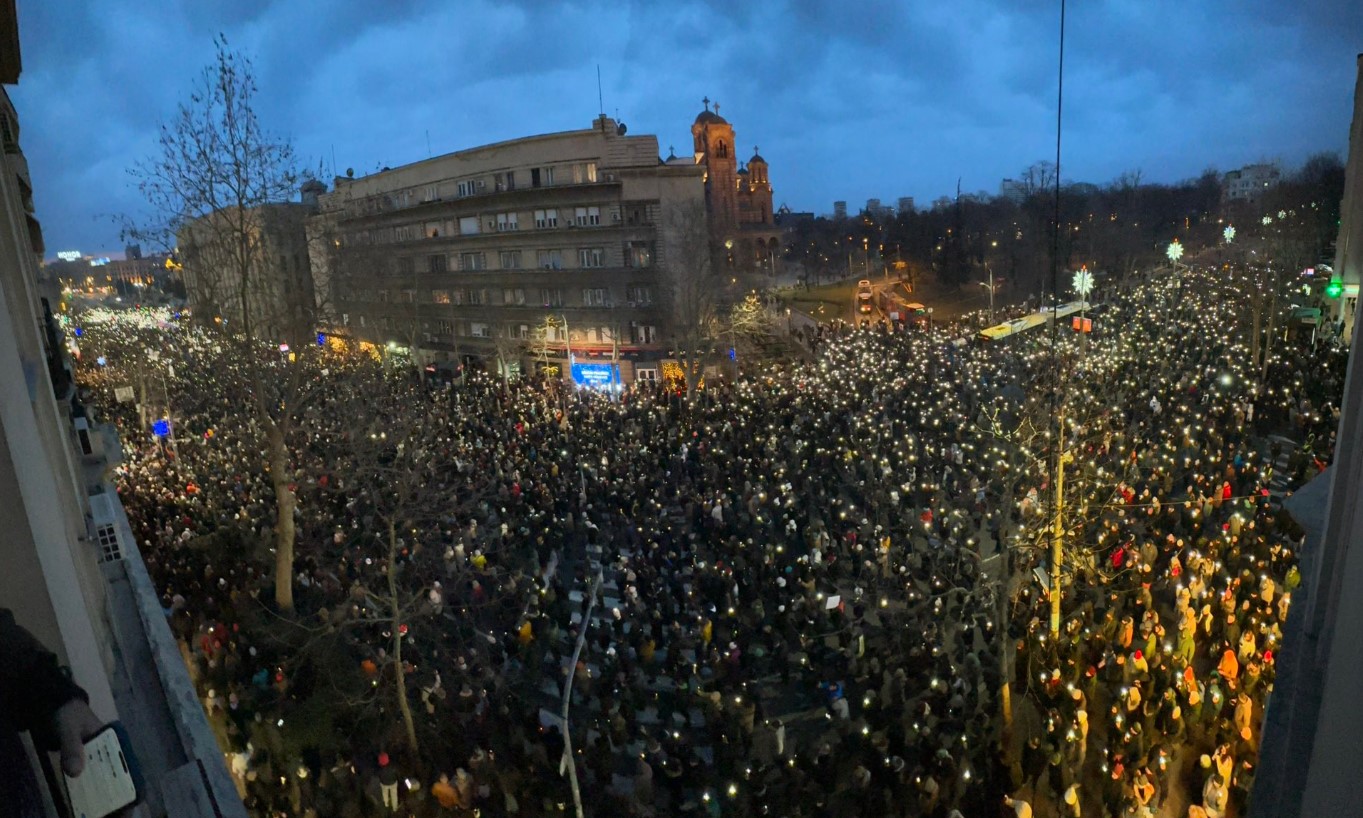
On the ongoing discussion about Malta’s emerging new political parties, it is worth noting what’s happening with the Serbian Opposition right now.
In 2023 Serbian elections were rigged, and incumbent President Aleksandar Vucic retained power despite national protests against him. Since then the Opposition in Serbia didn’t come up with a cohesive plan or an umbrella movement to challenge the incumbent government. Neither is the Opposition acting as an alternative government. Serbian Opposition parties can’t even agree with each other and are divided over many particularities.
There are at least two centre-left political parties that agree with EU integration: Democratic Party and Party of Freedom and Justice (SSP), and both are in parliament. There are also the liberals who are in favour of EU integration and these are the Movement of Free Citizens (PSG) and also the Liberal Democratic Party (LDP) but the latter are not in parliament. Then there are the centre-right parties which are in favour of EU integration that include People’s Party (Narodna), currently with no seats in parliament.
The Serbian Opposition actually created a coalition together and contested the elections under one movement called the United Opposition of Serbia. The coalition was lead by SSP leader Marinika Tepić, but the coalition did not survive the aftermath of the election and Opposition parties are now refusing to coordinate with each other.
Faced with a government that has captured state institutions, the opposition must be united and cohesive to succeed. However, its fragmentation and constant internal disagreements prevent it from effectively confronting such a strong opponent as the incumbent government. Nenad Čanak, a veteran Serbian Opposition politician who participated in anti-war protests during the early nineties, last year remarked that:
“There is no opposition in Serbia. There’s only COMPETITION FOR POWER. There are no other ideas. Whatever emerged, it was suppressed. There are NO media offering different perspectives. None. Scorched earth. Only the location remains, and even that will be divided between the Russians and the Chinese.”
Most of the protests being organised in Belgrade and other cities are being organsied by students and civil society. Political parties are failing to make their presence felt with civil society taking the lead. There are striking similarities with the Maltese and Serbian Opposition movements where in both countries, civil society is emerging as the true and opposing force against the government, while political parties bicker between each other.

Website Editor
Historian and Publisher

Leave a Reply