



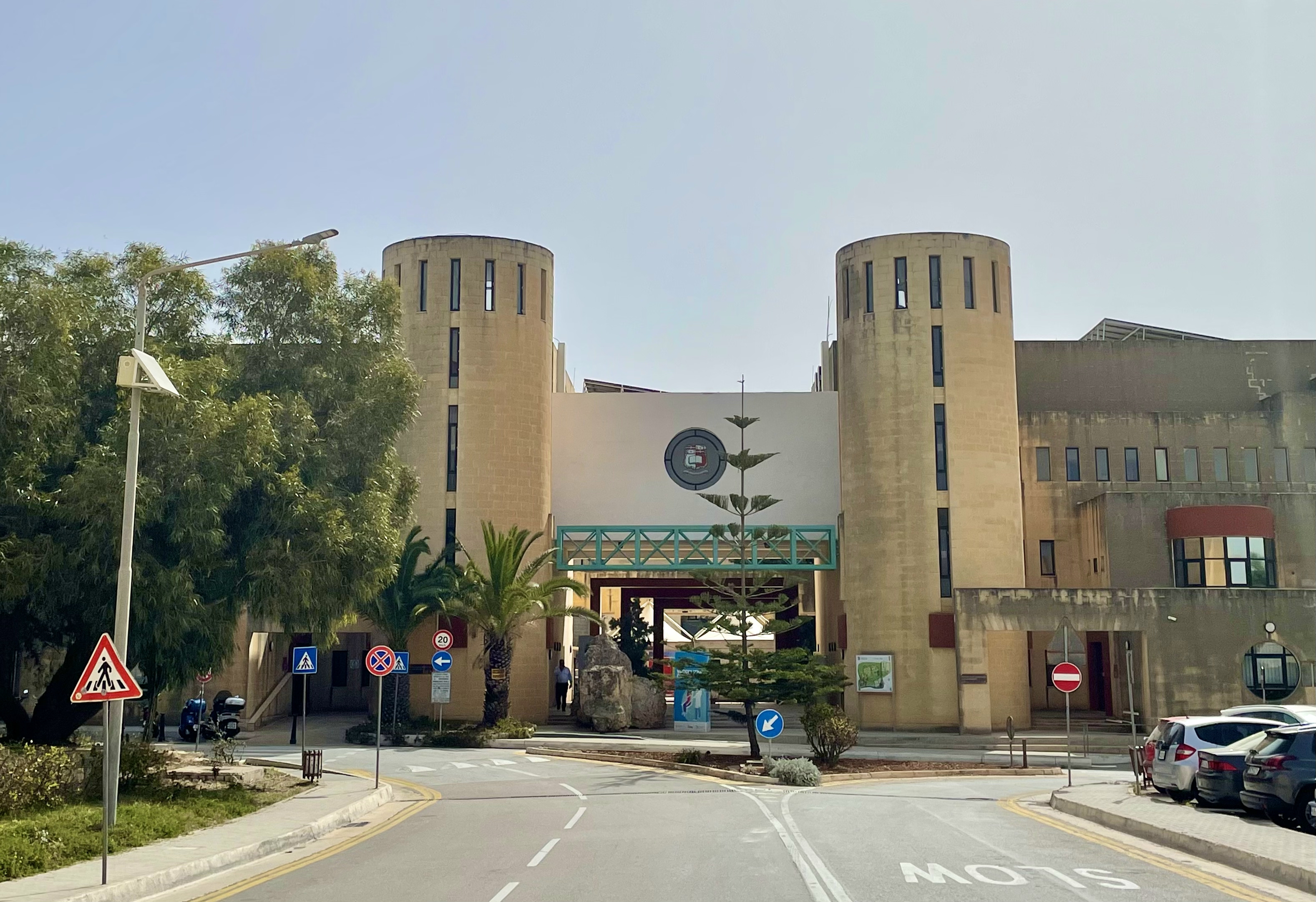
Last week, we received a letter by a lawyer threatening us to delete an article on behalf of his client. The lawyer, also happens to be a professor at the University of Malta. This story reminded me about the state of the University of Malta because it is unusual, to say the least, that a full-time lecturer at University, also has the time to do a full-time job as a lawyer representing banks and multinational companies.
I’m leaving the name of the lawyer out so as to focus on the argument at hand and avoid the risk of being accused of getting personal. However, I would like the reader to pause for a moment and ask themselves whether it is normal and acceptable for someone to be paid a full-time salary from public funds all the while this person is engaged in another full-time job in the private practice?
This is not a unique situation. At the University of Malta, which is an institution fully subsidised by public-funds and directly controlled by the government with its own chosen Rector, many lecturers are earning a higher income in the private practice than their publicly-funded salary and these include architects, lecturers at FEMA, lawyers doctors and many more. You may argue that having high-seasoned professionals giving lecturers to students make sense, but it is a completely different story when the rule has become that the University is now run by professionals and political appointees.
The Faculty of Law is an excellent example of this situation where apparently, politicians from both sides of Parliament are granted an automatic access to lecture students with a paid part-time position. None of them actually do any research. The only season academic at the Faculty of Law who was previously a politician is Tonio Borg and this is because it shows in his record of publications. The rest of them are academic tourists who had access to the University only due to their political position. Apparently, Robert Musumeci, the author of Malta’s disastrous planning laws, is an authority in planning law at the University of Malta.
Yet, the Faculty of Law is not an exception. In every Faculty you visit you will find individuals with extensive political connections who run the show based on personal whims and interests, and none of these Deans have any accountability in terms of the research their faculties produce, the amount of students they intake every year and the amount of capital they generate with their activities. One should also ask in this case, what incentive and interest does the government have to appoint its own Rector to the University without compelling the University to be accountable for the public funding it is given? The reason is also political because the University of Malta serves politicians best, especially when it comes to lecturing posts and the choice of policymakers.
For example. The Labour government awarded Carmen Sammut, someone with virtually no research and publishing track-record, as the Vice-Rector. In turn, Carmen Sammut served the Labour government as a policymaker on women’s issues, effectively giving a pseudo-academic facade to a government actively protecting organised criminals
Lecturers at the University of Malta like to fool themselves and the public by saying that the University is ranked among the 8% top universities in the world. In reality, this is a disgrace for the national university because we rank in 1705th position, behind rural universities in Iran, Brazil and Thailand. If you think this is an acceptable result for a national university, then you are not paying enough attention to the role of a university in today’s world.
As Europe ramps up its desperate effort for increased innovation, with the EU Commission President announcing the investment in GIGAfactories, and futuristic and complex documents authored by Mr. Whatever it Takes, our local economic discourse has largely revolved around how many Indians and Bangladeshis we will allow to continue driving taxis. It seems that we need to catch up with the times, but the University of Malta is not helping. Maybe the University of Malta needs a desperate revamp because this would also effectively reflect in our country’s policies, research and innovation. Maybe, it is no coincidence that the loudest defender of Yorgen Fenech is a lecturer at the University of Malta.
Doing the same thing over and over again won’t solve the situation. Lecturers at the University of Malta have no accountability for their publicly-funded salaries and giving them more freedom will surely not bring further material results. Too many lecturers have got used to getting paid for doing nothing and they will of course defend what they have with any legal way possible. Restructuring the University essentially means privatising it to a multinational corporation that would bring accountability and standards at the only national higher-education institution and university that we have.
This doesn’t mean students would lose free education. Instead, the government would subsidise students’ education costs directly rather than funding the University, effectively introducing a system of financial sustainability and accountability for both government spending and the University of Malta. In addition, under the management of a multinational corporation the university would be compelled to adopt a meritocratic system, and to produce research and products as opposed to having lecturers doing nothing at all. Not to mention its automatic disconnection from local politics.
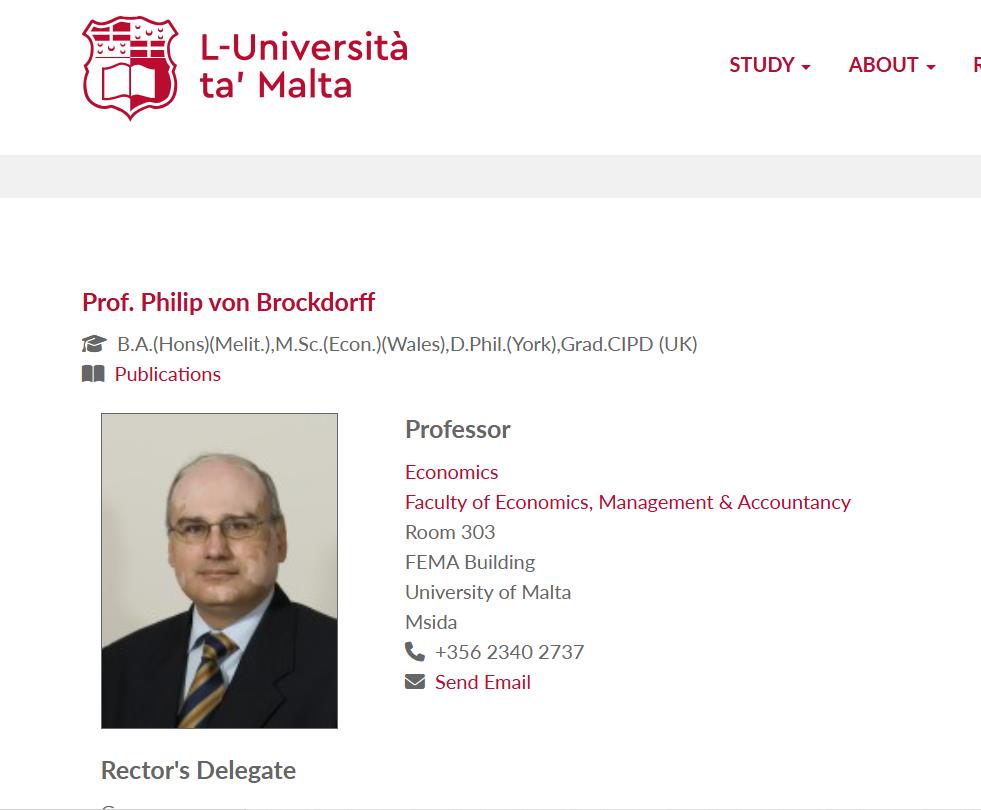
Bonus. Here is Philip von Brockdorff, as professor at the Department of Economics, congratulating Joseph Muscat’s friend.
Can’t get any better than this.


Website Editor
Historian and Publisher


Leave a Reply