
Advertisement

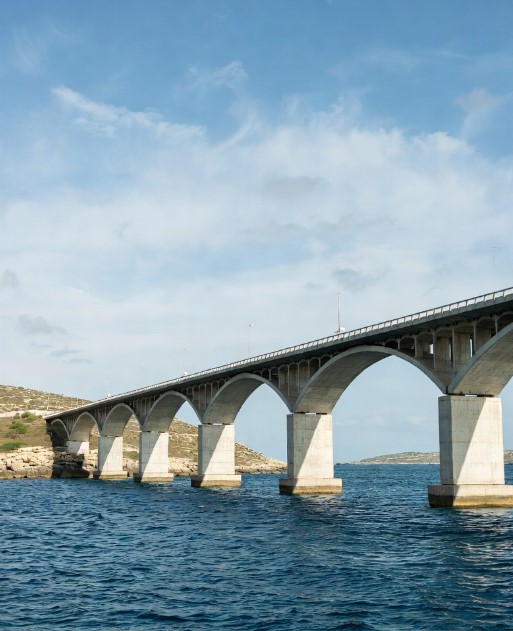
The case for a Gozo Bridge

With the MV Gaudos out of service and the Gozo Channel operating on a reduced timetable, the ever-ending question of whether — or when — a bridge to Gozo will be built resurfaces once again. The MV Gaudos will be out of service until February 7th.

Gozo (along with Comino), with a population of up to 41,000 people, makes up just 4.3% of the country’s GDP which is significantly low when comparing the output from the mainland. GDP per capita also came significantly lower than Malta’s, at 59.8% of the national average compared to Malta’s own region at 103.0%. For many years we were lead to believe that it would have been if Gozo remained without a bridge to conserve its environmental characteristics, yet this seems have come at the expense of Gozo’s economy.

One wonders whether the theory about not building a bridge to conserve Gozo’s environmental insularity still holds any water with the ever rising number of visitors to the small island and also the rising number of Maltese who are re-locating there due to the housing-affordability crisis.

Using a ferry connection to Gozo definitely doesn’t seem feasible and sustainable and also makes no economic sense. The government subsidises the Gozo ferry with up to €10 million in subsidies every year and these subsidies are increasing. Building a bridge would reduce transport costs for ordinary citizens, increase efficiency for Gozitans ultimately improving their lives and even improving its economy. Having a direct link with Gozo would also decrease its economic, social and cultural insularity. The Ministry of Gozo wouldn’t even be required and government ministries and departments can be assimilated with the central departments.

A bridge to Gozo shouldn’t be a significant challenge and the Maltese government is quite capable of building it. Meanwhile, Italy has revived plans to build a bridge across the Strait of Messina linking Sicily to mainland Italy, relying on EU fiscal flexibility for strategic infrastructure.

The new Opposition and Nationalist Party Leader Alex Borg should have a lot of sway in this debate — he is after all from Gozo. So far, he hasn’t been very supportive of the idea. Meanwhile, the government is wasting funds building a new air-strip in Gozo. The government seems to be committed to improve connectivity issues with Gozo by using all means, except for the most obvious and efficient solution.


Comments

9 responses to “The case for a Gozo Bridge”

  1. […] increased reliance on ferry services has also reignited debate on whether existing transport links are sustainable in the long term, especially during periods of reduced service and rising […]

  2. […] Nationalist Party held a press conference today in Ċirkewwa on the ongoing issues about Gozo Channel. During the press conference, Opposition MP Chris Said that the government is mismanaging Gozo […]

  3. M.Galea avatar

    I do not agree on this one with you Mark! Gozo is invaded by the Maltese. They ruined the whole Island buying property to rent out. The Island became very filthy and noisy which will be even worse with a bridge. Regarding not building the bridge to safeguard the environment, it is not the case! The environment is already ruined! Go see the construction taking place in odz. Everybody that owns a field who is not a farmer is building non sense structures with the blessing of this filthy government. The Island is already over populated. Capping needs to be done not building a bridge! But we have no one governing the country! They are there doing business for themselves!

  4. Ganni Borg avatar
    Ganni Borg

    I wonder how accurate is the statistic that Gozo’s GDP is just 4.3% of Malta’s GDP. Because businesses like the big banks and others which have branches in Gozo but are registered in Malta, do they actually report business from their Gozo branches separately? On the other hand, if the statistic is correct let us not make too much drama about it. All the big business, projects, hotels and contractors and biggest employers are based in Malta. Gozo’s private sector is made up of microbusinesses with some individual exceptions. Gozo’s major employer is the public sector. And one other thing, Gozo is super busy when the Maltese come in large quantities, because otherwise the bulk of tourism is made of day trippers where most of what they pay remains with the Maltese tour operators. The rest of the time Gozo service providers like hotels and restaurants are probably making a loss.

  5. Steve magri avatar
    Steve magri

    As Gabriel Zucman points out, GDP is a fairly narrow measurement

  6. Gerard J.Wirth avatar
    Gerard J.Wirth

    Gozo bridge studied under PN Borg Olivier a Japanese group…Victor Ragonese….project rejected.
    The pictorial shown could never happen only a suspension design could work when winds reach 40mph would have to close.

    Gozo ferry solution continues need larger ro-ro vessels…separate commercial only transfer after 6.00pm except emergency vehicles.

    Install an IT booking system…once booked message nationally sailing at 9.30am is booked…opening booking for 10.00am at 9.30am etc. Warning electronic billboard St.Paul’s bypass indicating sailing booked do not proceed to Cirkewa…booking solely-only.on.line.

    Eve of holidays double service…only President-PM-Ministers all on ‘official business’ could by-pass.booking system [one vehicle each]

  7. […] government seems to be dismissing the idea of a bridge to Gozo altogether as it doubles-down on its investment on the unsustainable and loss-making Gozo Channel […]

  8. […] for Gozo Clint Camilleri bring up excuses on why the government doesn’t want to build a bridge to Gozo. The excuses included it is a big project, it is a long-term plan and it involves too much […]

  9. Il-futur u l-prosperità ta’ Għawdex jiddependu fuq aċċess affidabbli u permanenti lejn Malta. Għall-ħafna residenti Għawdxin, il-mobilità mhijiex lussu iżda ħtieġa ta’ kuljum—għax-xogħol, għall-kura tas-saħħa, għall-edukazzjoni u biex jinżammu r-rabtiet familjari. Konnessjoni permanenti tneħħi l-inċertezza li toħloq dipendenza fuq il-maltemp u ssaħħaħ l-ekonomija lokali billi tagħmel lil Għawdex aktar attraenti għat-turiżmu, għall-irtirar u għall-industriji tal-benessri u tas-saħħa.

    Il-ħarsien tal-karattru ta’ Għawdex m’għandux jiġi konfuż ma’ stagnazzjoni. Huwa biżżejjed li jiġu protetti b’mod strett l-artijiet ODZ, iż-żoni agrikoli u r-riżervi naturali minn żvilupp residenzjali jew industrijali, u li jinżammu limiti ċari fuq l-għoli fiż-żoni ta’ valur storiku. Fl-istess ħin, żoni residenzjali oħra jistgħu jiżviluppaw b’mod responsabbli, inkluż bini aktar vertikali, biex jilqgħu tkabbir demografiku, talent ġdid u investiment. Barra minn hekk, il-ftuħ ta’ konnessjoni marittima diretta bejn Għawdex u Sqallija jista’ jkompli jsaħħaħ ir-rwol ekonomiku tal-gżira, jattira aktar turisti Taljani lejn Għawdex u jiffaċilita l-kummerċ ta’ prodotti Sqallin fis-suq Għawdxi. B’hekk, Għawdex jista’ jikber ekonomikament mingħajr ma jitlef l-identità tiegħu.

Leave a Reply

Your email address will not be published. Required fields are marked *