



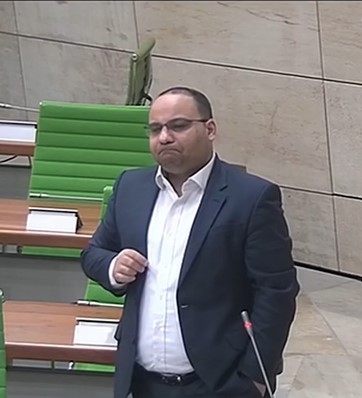
Earlier this week the Minister for Finances Clyde Caruana criticised the Opposition and media outlets which had raised the alarm over the European Commission’s position over Malta’s budget and its excessive-deficit procedure. The Minister said that the government is reducing the deficit and that there are no issue with the EU Commission. This is only partly true.
It is true that Malta has no major issues with the EU Commission over its budget even though it is currently under the excessive-deficit procedure. Malta has a budget deficit over 3% but matters are still very manageable and there are no major issues with the EU Commission. We’re still a bit far away before the EU Commission starts raising the alarm and we are also fiscally in a much better position than other European countries.
On the other hand, the Minister for Finances is not being completely honest about the risks that he is taking. The Minister for Finances is not really reducing the budget’s deficit, he’s reducing the deficit ratio which is supposedly the first step before reducing the deficit in real terms. In fact, the Minister for Finances planned to make a surplus on recurrent government expenditure this year, but his plans have been foiled as tax revenue didn’t meet growth expectations.
The Minister for Finance did try to apply a limited amount of fiscal prudence by making a cost-cutting exercises but on a structural basis, the Finance Minister has no concern about rising expenditure especially on energy and fuel subsidies. The deficit is increasing not going down and so is overall debt, and the fiscal model of the Minister for Finance depends on very optimistic growth forecasts. This is why the government could successfully bring down the deficit (even in real terms) in 2024 when the economy hit a record high.
The fiscal model of the Minister for Finances risks running out of hand if economic growth does not come expectation and it would completely collapse if a new mega crisis emerges. The government is not prepared for another crisis. The government is being “fiscally prudent” only as long there is high economic growth. Once the economic targets fail, the government’s “fiscal prudence” risks becoming a fiscal nightmare.

Website Editor
Historian and Publisher

Leave a Reply