



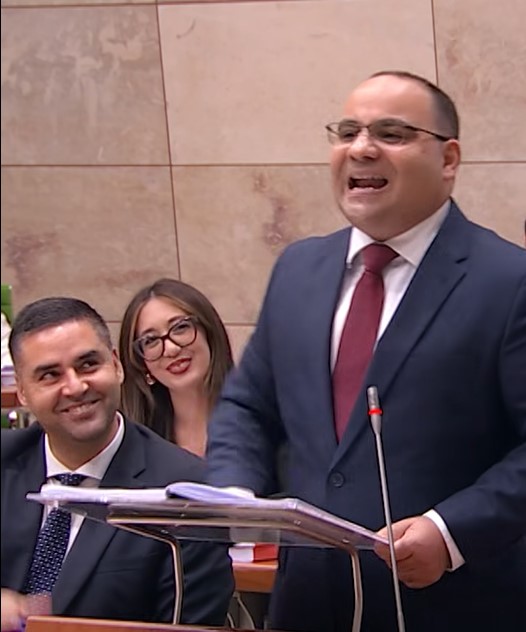
The Minister for Finances, Clyde Caruana gave a very dramatic speech about the budget’s measures of 2026, as he hit his hand on his bench with exhilarating excitement over the measures he announced. “This is what it means to be the party for workers” he said as he promised the income tax cuts for parents.
From a macroeconomic standpoint, the government’s ultimate aim is to collect even more taxes, and the Minister claims that this increased tax collection is coming from economic growth and further tax enforcement. The government is conducting a thorough fiscal exercise with the aim of collecting even more taxes year on year to pay for the rising government expenditure. Depending on your perspective, the government seems to be achieving some of its targets such as increase tax revenue and retaining high economic growth, but risks remain such as the fact that economic growth is buoyed by rising government expenditure. Inflation remains higher than the EU’s average.
The government has ambitious fiscal goals for next year and the Minister aims to increase his efforts on tax collection. The government aims to make surplus over government recurrent revenue but will make a deficit with capital expenditure. A cost-cutting exercise shows that the government is reducing its “waste” and inefficiency and spending more on health and pensions while retaining capital expenditure.
The government aims to collect up to 8.34% more in revenue from €9.528 billion to €10.323 billion. Effectively it plans to make a surplus over an estimated government recurrent expenditure from €9.532 billion to €10.085 billion.
Government expects income tax revenue ta to rise by 6.62% from €3.266 billion to €3.482 billion. VAT revenue is expected to rise from €1.611 billion to €1.695 billion. Total tax revenue is expected to increase by up to 6.2% from €7.344 billion to €7.814 billion. Non-tax revenue is set to decrease from €681 million to €606 million partly from a reduction of grants that will go down from €318 million to €300 million (Malta will be receiving less EU financing next year).
Some items which bring small amounts of government revenue are forecasted to increase including Land Registry Fees from €2.4 million to €3.2 million and Court fees from €5.6 million to €5.7 million. Environmental contributions are expected to increase from €7.4 million to €21 million potentially indicating an expected increase of property developments in ODZ. On the other hand, revenues from the Malta Residency Agency are expected to decrease from €30 million to €20 million.
Revenues from old people’s institutions are expected to increase from €46 million to €52 million. Social security contributions are expected to increase by 11.93% from €1.642 billion to €.,838 billion.
On the expenditure side, what is mostly evident is that interest payments on the government’s borrowings will increase by 52.6% from€872 million to €1.330 billion. Energy subsidies are going to increase from €152 million to €172 million.
In terms of recurrent expenditure, some Ministries received cuts such as the Ministry of Culture which received a cut from €180 million to €172 million. The Ministry of Agriculture also went from €71.9 million to €70.3 million. The Ministry of the Economy also received a cut from €66.64 million to €62.98 million. These cuts confirm a cost-cutting exercise by the Minister.
The Prime Minister’s Office however will receive an increase from €98 million to €110 million. Ministries which had substantial increases include the Ministry for Social Policy and children’s Rights with an increase of 2.377 billion to €2.55 billion (marking the pensions increases) and the Ministry of Home Affairs with an increase from €393 million to €422 million marking a focus on security. The Ministry of Education received a gradual increase from €1.044 billion to €1.096 billion and the Ministry of Health’s recurrent expenditure increased from €1.485 billion to 1.578 billion.
Capital expenditure will actually decrease slightly from €1.278 billion to €1.123 billion.
The government has an ambitious plan and the Minister is correct that his budget is a social-democrat exercise. From the budget’s macroeconomic perspective, it aims to collect more taxes from businesses and less taxes from parents, while increasing pensions. The government is keeping up with the health and education burden but is reducing waste and inefficiency in the government. On the other hand, the problems with this budget is that inflation still remains higher than the EU’s average despite the increasing burden of public energy subsidies.
Added with this rising inflation, the government is actually spending more on sunk-cost capital (energy subsidies), and recurrent expenditure of health, education and pensions meaning that the public expenditure burden is shifting from investment and projects to a more restricted approach aimed at paying for the minimum necessities.
You can find the budget estimates here.

Website Editor
Historian and Publisher


Leave a Reply