



The latest figures published by the National Statistics Office (NSO) for the fourth quarter of 2025 paint a mixed picture of Malta’s public finances, raising questions about whether Finance Minister Clyde Caruana is truly on track with his fiscal targets.
According to the NSO’s quarterly accounts, Malta’s general government deficit for 2025 stood at €545.3 million, or 2.2% of GDP, marking a significant improvement compared to previous years. At face value, this suggests that the government is managing to rein in the deficit and move closer to EU fiscal benchmarks.
However, a closer look at the quarterly data reveals a far more uneven trajectory throughout the year.
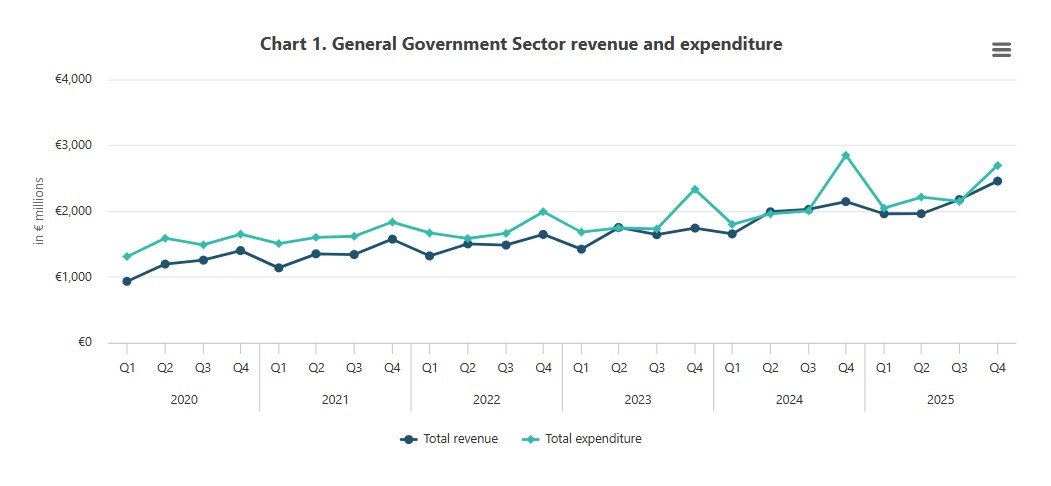
In the first quarter of 2025, the government recorded a deficit of €240.4 million, driven by falling revenue and rising expenditure.
By the second quarter, the deficit narrowed to €170.4 million, although this was still heavily influenced by increased spending and weaker revenue performance compared to the previous year.
In the third quarter, the situation temporarily improved, with the government registering a surplus of €82.6 million, supported by stronger revenue growth outpacing expenditure increases.
By the fourth quarter, however, the overall annual balance settled back into deficit territory, with the full-year figure reaching €545.3 million.
This pattern highlights a recurring issue in Malta’s public finances: while short-term improvements are possible, they are often offset by persistent expenditure pressures.
Indeed, broader government finance data shows that total expenditure in 2025 increased by over €600 million, far outpacing the rise in revenue. The bulk of this increase came from recurrent spending, particularly under programmes and initiatives, while capital expenditure actually declined slightly.
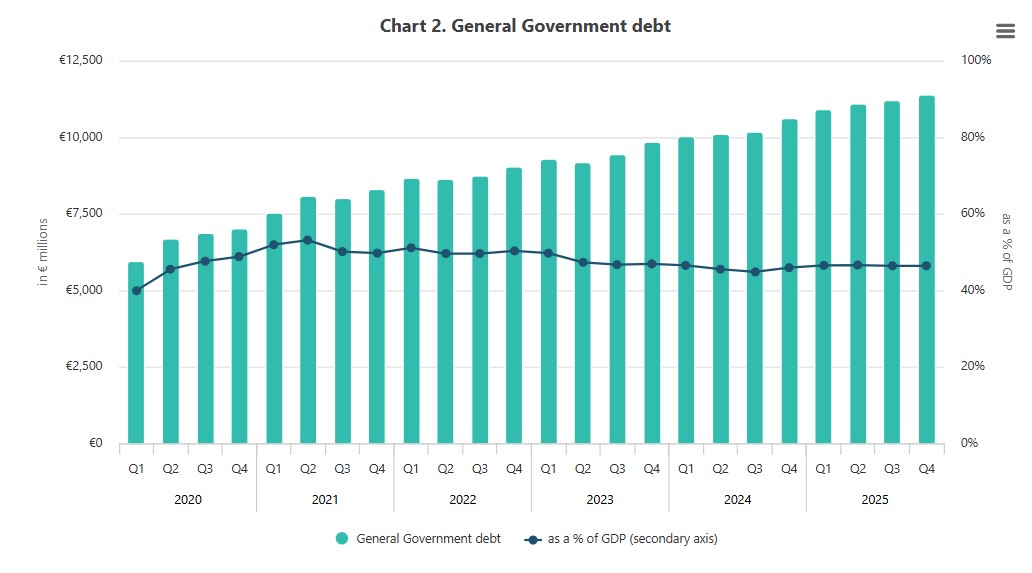
This raises a fundamental question about the sustainability of the government’s fiscal strategy. While the headline deficit has improved as a percentage of GDP, this has occurred in a context of continued high spending and rising debt, which reached €11.4 billion, or 46.4% of GDP by the end of 2025.
In this light, Finance Minister Clyde Caruana may be meeting his deficit targets on paper, but the underlying structure of public expenditure suggests a more fragile position. The reliance on recurrent spending, combined with limited growth in capital investment, points to a fiscal model that may struggle to deliver long-term sustainability.
Ultimately, the figures suggest that while the Minister is managing to stay within headline limits, the broader question remains unresolved: is Malta genuinely consolidating its public finances, or simply postponing the harder structural adjustments?

Newsroom


Leave a Reply