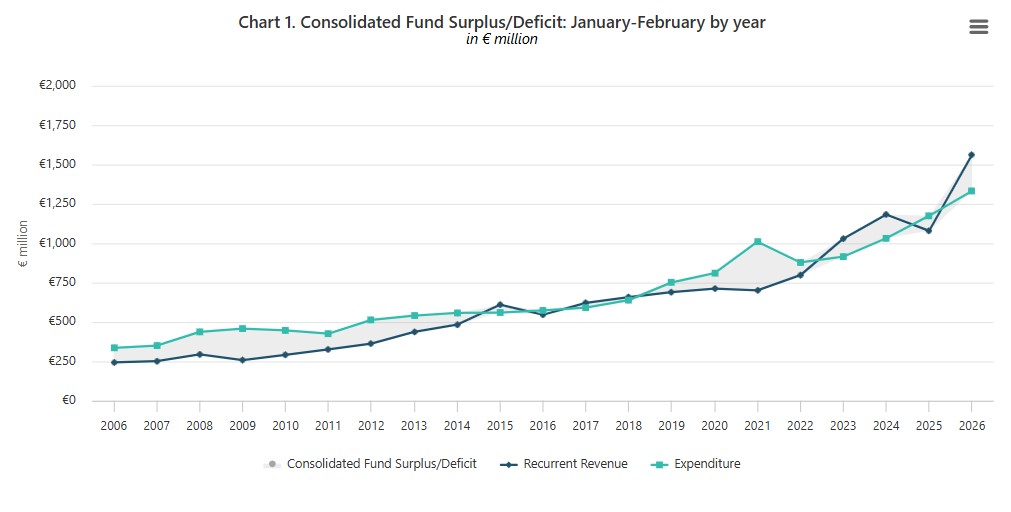
According to the latest data released by the NSO Malta’s public finances showed a sharp improvement in the first two months of 2026, with the government reporting a €229.6 million surplus in the Consolidated Fund by the end of February. The turnaround is significant when compared to the same period last year, which had registered a €95.1 million deficit, pointing to a strong increase in government revenue. However, as repeatedly highlighted in past, the headline surplus masks deeper structural issues in the way government revenue is being generated and expenditure sustained.
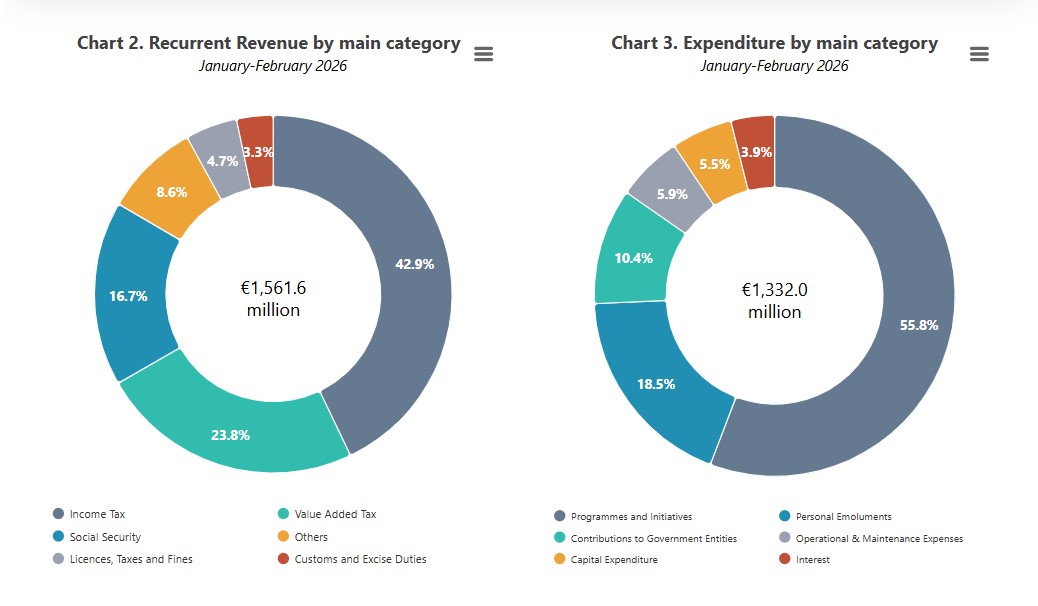
The figures show that recurrent revenue surged by €482.7 million by up to €1.56 billion, driven primarily by a sharp rise in income tax receipts (+€306.5 million), VAT (+€94.3 million) and grants (+€72.3 million). This reflects continued strong economic activity and tax collection, and are in line with the Finance Minister’s targets.
At the same time, government expenditure continued to rise, albeit at a slower pace, increasing by €158.1 million to reach €1.33 billion. The largest increases were recorded in recurrent expenditure (+€75.6 million), including higher spending on social security and medicines. Malta’s EU contributions are also increasing in line with its economic growth.
Capital expenditure also increased but not significantly, rising to €72.9 million, with funds directed toward infrastructure projects such as road construction and digital initiatives.
Despite the improved balance, Malta’s central government debt continued to rise, reaching €11.44 billion by February 2026, an increase of €509.3 million compared to the previous year. Earlier data already showed debt levels exceeding €11.3 billion at the start of the year. Short-term improvements in the fiscal balance are being achieved alongside structurally rising debt and continued reliance on high revenue intake.









Leave a Reply