



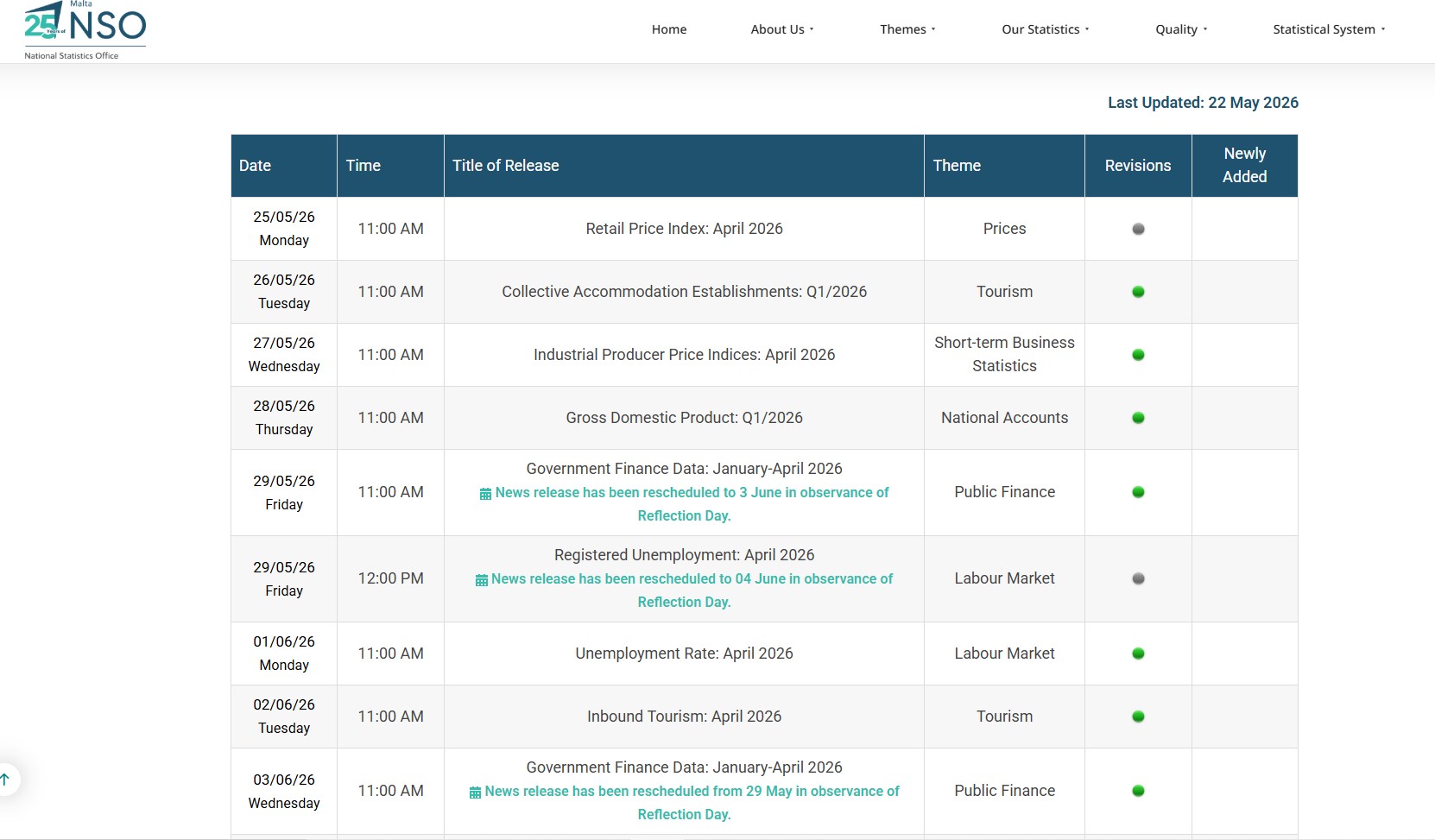
The government’s finance data, which includes estimates of expenditure and revenue for January to April, and was originally scheduled to be published on 29 May, has been postponed, with “Reflection Day” cited as the reason.
The decision is highly unusual, since official statistics are supposed to be politically neutral and their publication should not be affected by political events.
Government finance data published so far this year shows rising social expenditure and slower tax-revenue growth, although overall revenue is still increasing. The latest figures for the first two months of the year showed a €229.6 million surplus in the Consolidated Fund, a significant improvement from the €95.1 million deficit recorded in the same period last year. Recurrent revenue increased by €482.7 million to €1.56 billion, mostly due to higher income tax, VAT and grants. Expenditure, however, also kept rising, increasing by €158.1 million to €1.33 billion, with higher recurrent spending on social security and medicines.
The improvement in the deficit figures has so far been driven mainly by strong tax intake and economic growth, but this does not change the underlying trend of rising expenditure and debt. Central government debt had already reached €11.44 billion by February 2026, up by €509.3 million from the previous year.
The Finance Minister has repeatedly based his fiscal strategy on strong economic growth generating enough revenue to bring down the deficit. In April, Minister Clyde Caruana presented financial estimates he described as conservative, arguing that sustained growth would allow the government to reach an annual budgetary surplus by 2029. He also said the 2025 deficit stood at €545.3 million. This fiscal estimates changed all of a sudden with a newly rolled-out election campaign manifesto.
The government is now simultaneously promising to maintain subsidies, expand social expenditure and still reduce the deficit on the back of economic growth. This is exactly why the postponed January-to-April finance data is being made in the interest of the Labour Party: it would show whether the public books are still moving according to the Finance Minister’s earlier plan, or whether recurrent expenditure is already diverging from his previous estimates. The postponement of the publication will also conceal any potential expenditure spikes caused by pre-electoral favours and gifts.
You can view the NSO calendar here.

Website Editor
Historian and Publisher



Leave a Reply