



The second batch of public finance statistics by NSO following the publication of the statistics of the Consolidated Fund confirm that the government’s finances are significantly off-tack from what was promised by Finance Minister Clyde Caruana in an April conference at the Ministry of Finance.
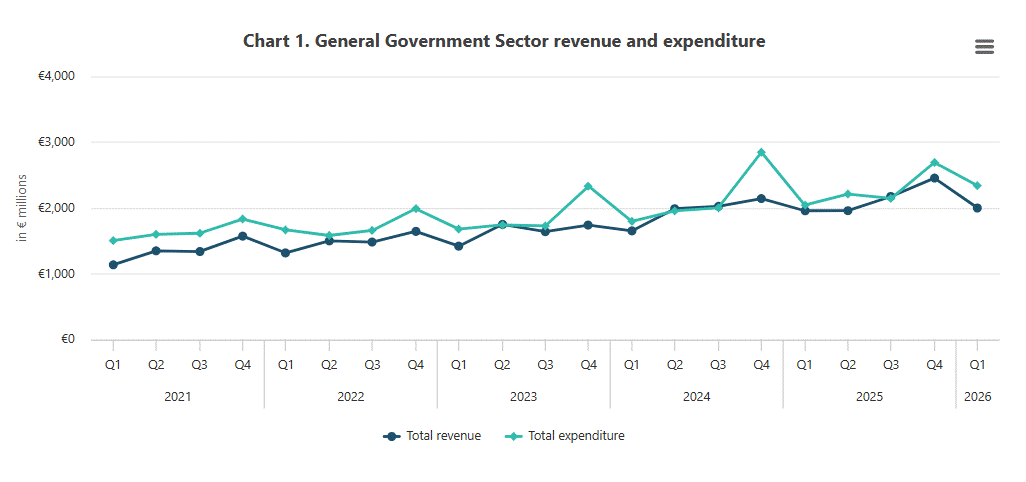
The government recorded a general government deficit of €339 million during the first quarter of 2026. Total revenue reached €2.002 billion, while expenditure climbed to €2.341 billion. Compared with the revised figures for the same quarter of 2025, revenue increased by just €42.5 million, or approximately 2.2%, while expenditure surged by €296.3 million, or around 14.5%.
As a result, the gap between government revenue and expenditure increased by €253.8 million year on year. On the basis of the revised comparative figures contained in the latest NSO release, the deficit rose from approximately €85.2 million in the first quarter of 2025 to €339 million this year—an increase of almost 298%. In other words, the quarterly deficit has nearly quadrupled.
The €339 million deficit was also €101.8 million, or approximately 42.9%, higher than the €237.2 million deficit recorded during the final quarter of 2025.
The latest figures contrast sharply with the projections presented by Finance Minister Clyde Caruana at a press conference in April. Following the publication of the better-than-expected 2025 deficit, Minister Caruana projected that the deficit would decline to 1.6% of GDP in 2026, 1% in 2027 and 0.4% in 2028, before the government reaches fiscal balance or potentially registered a surplus in 2029. The first-quarter deficit alone is already equivalent to approximately 1.36% of the latest annual GDP measure used by the NSO.
Expenditure is clearly increasing much faster than previously estimated. Intermediate consumption recorded the largest year-on-year increase, rising by €93.3 million. Social benefits and social transfers in kind increased by €66.5 million, compensation of government employees rose by €54.4 million, and current transfers payable increased by €46.5 million.
On the revenue side, taxes on production and imports increased by €66.2 million, while capital transfers receivable rose by €26 million. These gains were partly wiped out by a €93.7 million decline in current taxes on income and wealth. The weakness in income-tax revenue is particularly notable because it occurred during a period in which the government continued to report strong economic and employment growth, apart from increased expenditure.
The broader accounts reveal a much larger deficit
The difference between the earlier Consolidated Fund figures and the latest General Government accounts is significant.
The Consolidated Fund, which records the central government’s cash receipts and payments, registered a deficit of €84.3 million during the first three months of 2026. At the time, this appeared to represent a major improvement over the €240.4 million cash deficit recorded during the same period in 2025.
However, the General Government accounts are compiled under the European System of Accounts and include accrual adjustments, extra-budgetary units, local government and other transactions that are not fully reflected in the cash-based Consolidated Fund balance. The NSO applied adjustments totalling €254.7 million, increasing the reported first-quarter deficit from €84.3 million on a Consolidated Fund basis to €339 million under the broader General Government measure used for EU fiscal surveillance.
The latest release therefore reveals liabilities and expenditure that were not visible in the initial cash-based figures. It also shows why the Consolidated Fund balance should not be treated as the definitive measure of Malta’s fiscal performance.
The apparent improvement in the cash accounts also failed to continue after March. By the end of May, the Consolidated Fund deficit had increased to €178 million, compared with €146.1 million during the same five-month period in 2025. Expenditure rose by €549.4 million, exceeding the €517.5 million increase in recurrent revenue and worsening the cash deficit by €31.9 million.
The two releases now point in the same general direction: government expenditure is increasing faster than the revenue available to finance it.
Previous figures were substantially revised
The latest release also contains a notable revision to the government’s first-quarter performance in 2025.
When the NSO originally published its Q1 2025 accounts in July last year, it reported revenue of €1.9797 billion, expenditure of €1.972 billion and a General Government surplus of €7.7 million.
The comparative figures used in the new Q1 2026 release now imply revised revenue of approximately €1.9598 billion and expenditure of €2.045 billion for Q1 2025, producing a deficit of approximately €85.2 million rather than the originally reported €7.7 million surplus.
This amounts to a negative revision of approximately €92.9 million to the Q1 2025 balance. The NSO states that its quarterly figures are provisional and subject to revision, but the scale of the change demonstrates why initial fiscal results must be interpreted cautiously.
Government debt continues to increase
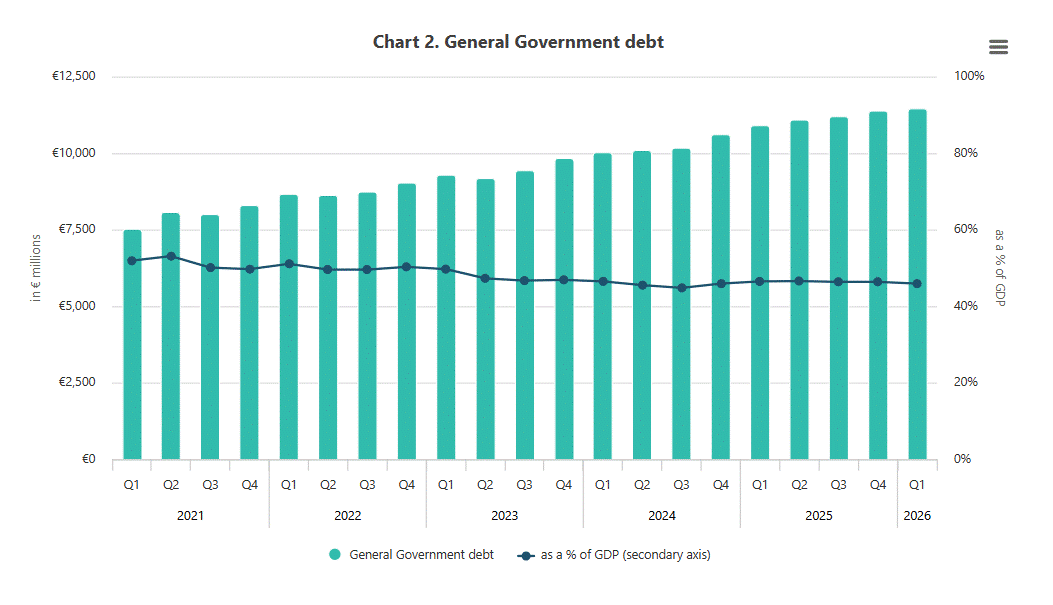
General Government debt reached €11.458 billion at the end of March 2026, an increase of €549.3 million compared with the first quarter of 2025. The debt stock also increased by approximately €60.5 million compared with the end of December 2025.
The first-quarter figures do not, on their own, prove that the government will miss its full-year deficit target. Tax receipts, EU grants, capital expenditure and other transactions can fluctuate substantially throughout the year. However, the combination of rapidly rising expenditure, weak revenue growth in the broader accounts, a worsening cash deficit by May and a rising nominal debt stock places the government’s projected fiscal consolidation under considerable pressure.
The government will need either a substantial acceleration in revenue, a slowdown in expenditure or both during the remainder of the year if it is to reduce the annual deficit to the 1.6% of GDP promised by the Finance Minister in April.

Newsroom



Leave a Reply