



Provisional Eurostat figures show that Malta’s seasonally adjusted general government deficit stood at 3.6% of GDP in the first quarter of 2026, increasingly sharply from 0.1% in the same quarter of the previous year and 3.1% in the preceding quarter.
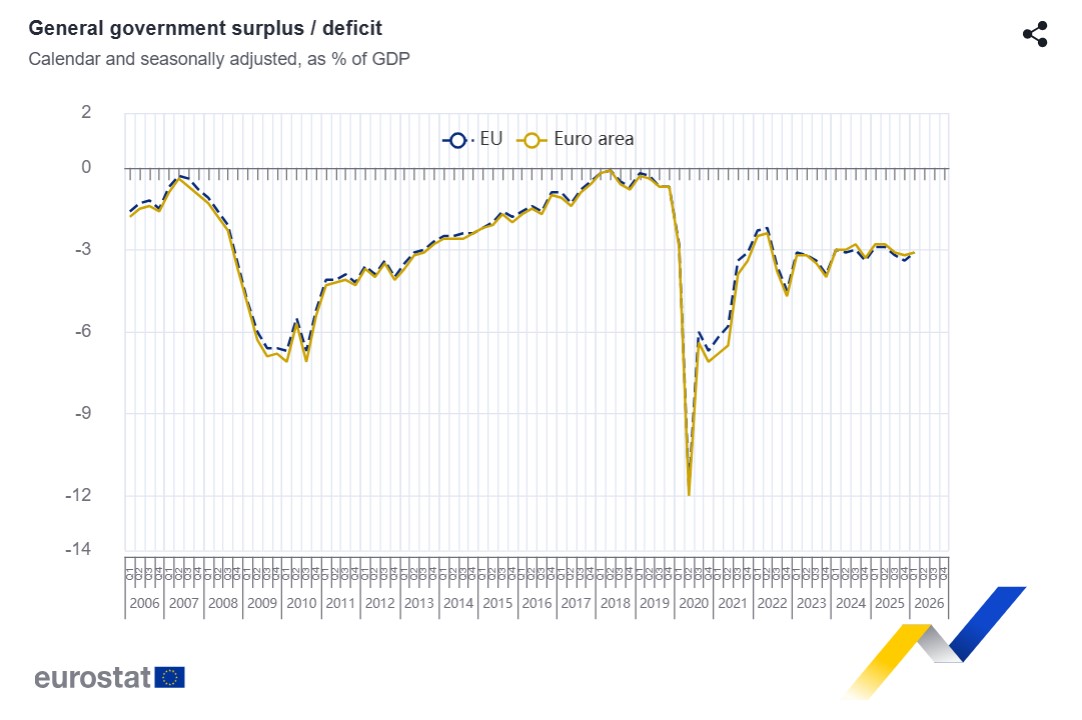
The average seasonally adjusted general government deficit-to-GDP ratio stood at 3.1% in both the euro area and the EU.
Previous NSO statistics had already shown government expenditure increasing sharply by 14.5%, or €296.3 million, to €2.341 billion during the first quarter of the year, while revenue grew by only 2.2%, or €42.5 million, to €2.002 billion.
The government intends to issue a bonanza of subsidies as promised during the general election campaign while simultaneously bringing down the deficit and produce a government surplus by the end of the decade but the current trend is still showing an expansive growth in government expenditure without the necessary offset in government revenue.
The government is also being faced with renewed inflationary pressure due to the war in the Persian Gulf, and higher oil prices will keep pushing the government’s subsidy bill higher, further complicating its task to balance its books.
The countries with the five largest deficits were Bulgaria (7.6%), Hungary (6.6%), Poland (5.9%), France (5.1%) and Belgium (4.8%).
The five strongest seasonally adjusted government balances in the first quarter of 2026 were recorded by Cyprus, with a surplus of 4.4% of GDP, followed by Ireland at 2.4%, Denmark at 2.0%, Greece at 1.2% and Portugal at 0.3%. These were the only five EU member states to record a surplus, while Lithuania registered the smallest deficit, at 0.9% of GDP.

Newsroom



Leave a Reply