



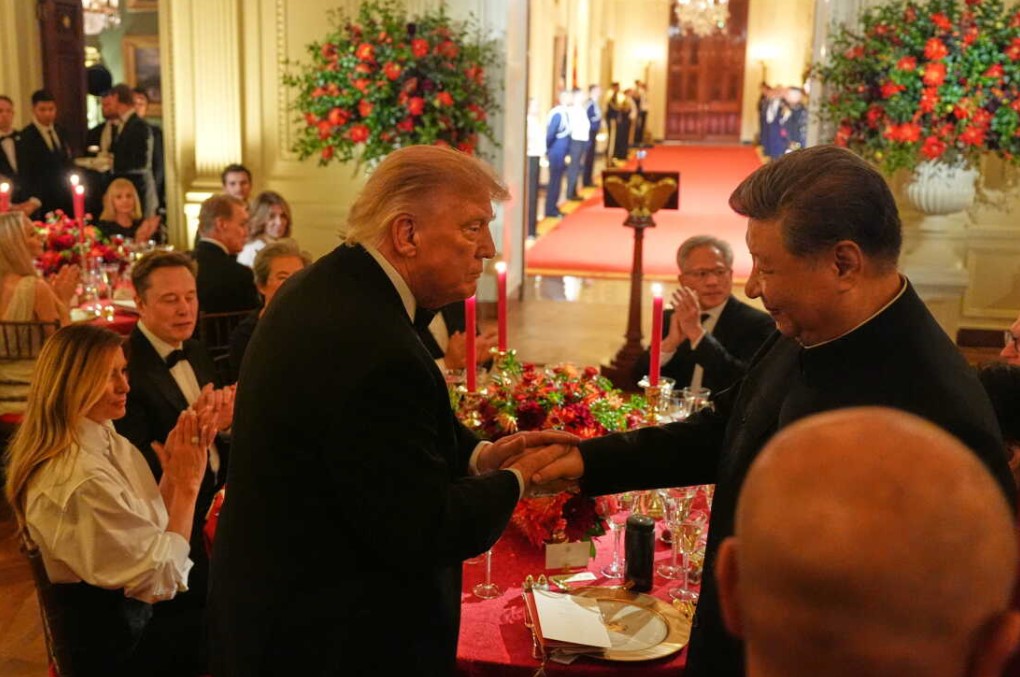
Xi Jining dined with US President Donald Trump and US tech executives at the White on Thursday as the UNGA took place in New York. The visit was supposed to serve as a continuation of the last meeting in May with Taiwan and trade high on the agenda.
The White House made no announcement at the dinner itself of a new overall tariff rate on Chinese goods. After the visit, Washington and Beijing said they would cut tariffs on about $30 billion of “non-sensitive” goods each way and extend their trade truce by two months, to 10 January. The broader U.S. tariff regime on Chinese imports was otherwise left in place; the average U.S. tariff on Chinese goods was about 36.5% as of July 2026. President Donald Trump said the US relationship with China has “never gotten along better.” China has been a major supplier of dual-use drone and missile components — and portable air-defence systems to Iran during the US–Israeli war against Iran earlier this year.
On the other hand, China was also condemned by small-island Pacific nations over its ballistic missile test in July which overflew the airspace of several island states without notice. On 6 July 2026, China launched a nuclear-capable submarine-launched ballistic missile which passed over the Philippines, Palau and the Federated States of Micronesia and landed in international waters between Nauru, Tuvalu and the Solomon Islands. The incident was condemned at the UNGA by President Surangel Whipps Jr. of Palau. Prime Minister Feleti Teo of Tuvalu who previously condemned the test took the opportunity at the UNGA to condemn China’s miltiarisation of the Taiwan Strait.
China’s missile test comes as it rapidly increases the size of its nuclear arsenal. It has increased its nuclear arsenal by about 20 warheads to approximately 620 as of January 2026, according to SIPRI.
The Philippines, which is increasingly being bullied by China, also had something to say about this. In her speech at the Assembly, Foreign Secretary Ma. Theresa Lazaro said that the seas must remain open and secure, and free from interference and coercion.In a meeting on the sidelines on maritime security, Japan and the Philippines were more explicit and condemned China’s arbitrary attempts to change the status quo by force in maritime borders.
Feature photo by NPR (US).


Website Editor
Historian and Publisher


Leave a Reply