



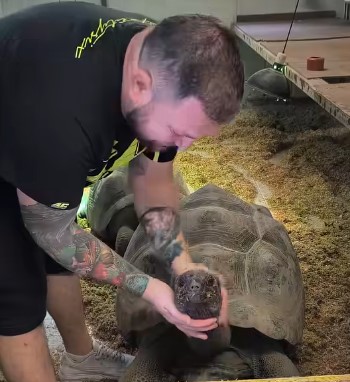
Last October, Maltese citizen Nicholas Delia, owner of the exotic-animal shop Rodent Kingdom and Exotics in Qormi, was stopped by Italian authorities at the port of Pozzallo in Sicily while transporting 300 tortoises and 77 parrots in a vehicle bound for Malta. Italian authorities reported him to prosecutors over animal-welfare offences and breaches of international wildlife-trade regulations. Seventy-six of the parrots were identified as belonging to species protected under the Washington Convention (CITES).
Delia’s business is one of several enterprises operating in an exotic-animal market that has expanded under the Labour government, following its reversal of the progressive animal-welfare agenda it once promoted.
During Labour’s early years in government under Joseph Muscat, the party adopted a progressive approach towards animal welfare and introduced several legislative reforms, including the 2014 amendments to the Animal Welfare Act banning animal circuses. That position has since been abandoned. Under Robert Abela, the government went to the other extreme end, introducing legislation that legalised private zoos and relaxed restrictions on the keeping and trading of wild and exotic animals.
The consequences have been substantial. The government’s new legislation had allowed the regularisation of 96 previously undocumented wild animals. This brought the total number of registered wild and exotic animals in Malta to 244, including 30 lions, 63 tigers and a bear. The owners of these animals were also granted an amnesty for failing to register them.
One of the most notorious figures in this industry is Anton Rea Cutajar, better known as Tiger Man, who has exported tigers and lions to Libya. Then we have the case of Christian Borg who used to keep lions on the roof of his car-showroom until he abandoned the lions in a derelict building in Naxxar. The government eventually facilitated their relocation to the animals’ breeder, Martin Farrugia, whose own private zoo had previously been illegal before being regularised under Labour’s reforms.
The government also granted an amnesty to owners who had failed to register their wild animals, while public resources were used to deal with the consequences of Borg’s abandonment of the lions.
Charles Polidano, known as Ċaqnu, is another prominent example. His Montekristo Estates had an unlicensed zoo, with dangerous animals, including a tiger. His zoo has just been regularised. Another zoo is the Wildlife Animal Park in Imtaħleb, where tigers and bears were filmed being kept in confined conditions. The zoo was rebuilt after it was destroyed with fire in 2017 which killed many animals.
There is also the disturbing question of how these animals are being fed. In June 2024, 33 live horses were being imported into Malta every week which were mostly being used to feed these wild animals.
Labour has effectively created an economic niche around the private ownership, breeding, importation, exhibition and trading of wild animals. It is an industry that depends on keeping large, dangerous and often highly intelligent animals confined for the amusement, prestige or commercial interests of private individuals.
The political reversal is particularly striking. A party that once presented itself as progressive on animal welfare has now overseen the expansion of an industry that has repeatedly produced cases of abandonment, neglect, inadequate facilities and cruel animal-trading practices.
Malta does not need more private menageries, more exotic-animal traders or more people collecting lions and tigers as if they were luxury possessions. It needs stronger animal-welfare laws, proper enforcement and an end to the private keeping and commercial exploitation of wild animals.
Labour has instead helped create an economic niche built on cruelty and barbarity. It is a fitting reflection of a political party that has abandoned its progressive ambitions and appears increasingly incapable of contributing to the country’s social progress.

Website Editor
Historian and Publisher
Leave a Reply