



The Labour Party’s new social contract will make banks and construction developers significantly richer. Society’s wealth is increasingly being transferred to the construction industry with banks being indirect recipients of this wealth transfer. Labour is presenting its subsidies as traditional socialist welfare, but underlying this façade there is this transfer of wealth turning the subsidies into a feature of a wider system of crony capitalism in which the construction and real-estate industry dominates economic policy.
The alternative to this new crony capitalism should not be a return to the traditional welfare state models as these are becoming ever more defunct in today’s economy in which assets, especially property are out of reach to the average salaried-worker. The alternative to the new social contract should involved a total macroeconomic overhaul that would once again enable more access to the property market.
Ironically, by giving out subsidies and increasing pensions and cost of living adjustments, the economic drive towards prosperity for the working-class in a housing crisis, becomes gradually and gradually linear just like trickle-down economics. The Labour Party is getting away with instituting an extreme form of crony capitalism through propaganda and its historical socialist brand.
The new form of socialism which would enable economic growth without a transfer of wealth from working and the middle-class to the bank sand the construction industry is rooted in macroeconomic reforms. The main challenge at hand in our economy is to make the property market more accessible and effectively this would potentially overturn the trend of the declining birth-rate. Access to the property market needs to be increased by increasing the supply and turning to contemporary and modern solutions such as by actually building ample affordable housing units.
This is a reality that we all have to face unless we are accepting the trajectory of building a Dubai-like two-tier class economy mainly divided by the residential property owners and the working-class which lives in precarious and degrading conditions. The price of property has to go down as a result of an ample increase in the supply of property while jobs in the construction industry are retained with the rising volume of construction. Society has no obligation to protect the speculative property investments of the few – yet this is the top priority in the government’s policy when it comes to housing.
There is also a moral dilemma here which Labour is resolving in favour of property owners. Labour is safeguarding the high value of property prices at the expense of those who still need to purchase property and the overall birth0rate. Labour’s safeguard is not aimed at single-home owners whose home serves more as a utility rather than as an investment or a an Air B’nB side-hustle. Let’s not deceive ourselves.
The mass construction of affordable housing units would ensure continued growth in the construction industry, provide ample housing to the Maltese, incentivise more families, and effectively overturn the decreasing birth-rate. Someone may get hurt because they would have to sell their property after over-indebting themselves to buy properties they do not need, but this would be a very small price to pay to bring society back to normality.
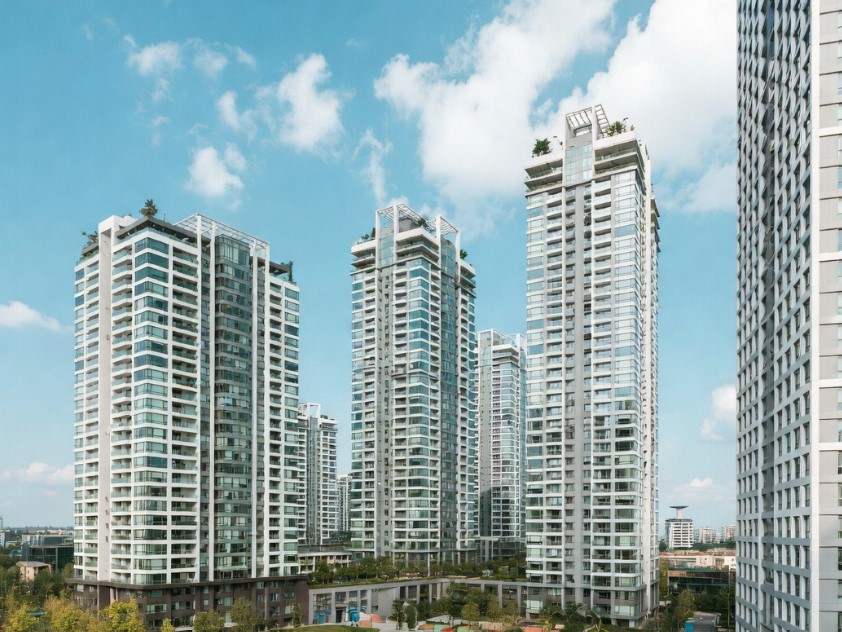
Featured image is an artificial rendering of affordable-housing units.

Website Editor
Historian and Publisher



Leave a Reply