



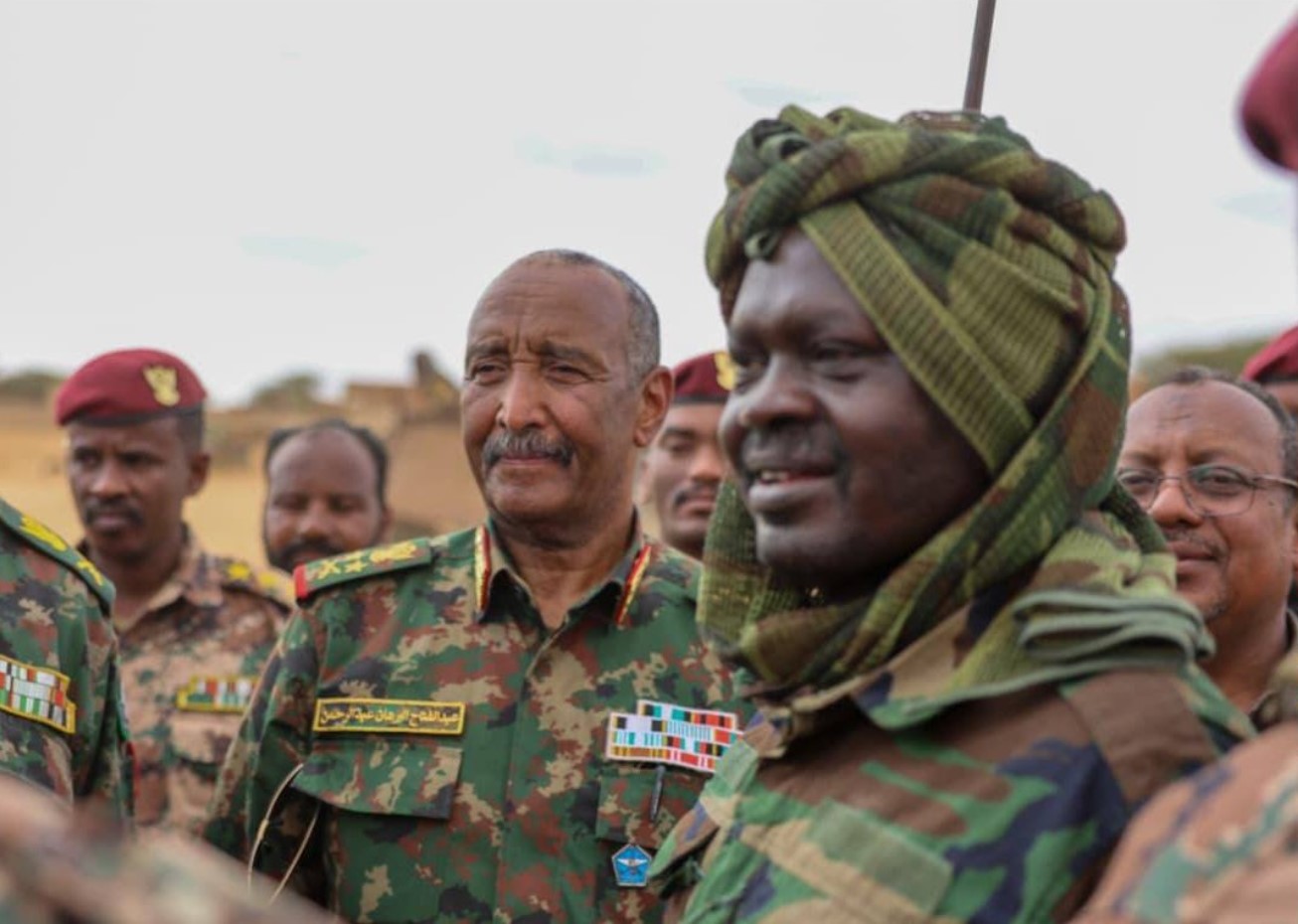
Despite the fact that the Rapid Support Forces are estimated to have up to 200,000 personnel fighting in their ranks, including foreign mercenaries, and a well-supplied arsenal—including drones provided by the United Arab Emirates through multiple routes, such as eastern Libya, Chad, and Ethiopia—the RSF appear to be losing the war in Sudan.
Last year, the RSF successfully captured the besieged city of Al-Fashir in the North Darfur region. The victory gave the RSF a morale boost, but it was hardly a strategic one. More remarkable was the fact that the city had withstood the RSF siege for 18 months before finally falling, demonstrating to the world the resolve that the Sudanese people would need to muster to resist the RSF’s onslaught.
They had few options other than to flee, which could also prove fatal. The RSF celebrated its capture of Al-Fashir by massacring thousands of people in the city and along the routes used by those attempting to escape. Its forces also committed mass rape and looting, killed journalists, and imprisoned one of the city’s last remaining journalists, Muammar Ibrahim.
The Sudanese army, on the other hand, focused on securing strategic victories that would enable it to expand its campaign further, making significant advances by recapturing Sudan’s capital, Khartoum.
The Sudanese army has now secured another strategic victory in North Kordofan, opening the way for further advances into West Kordofan and increasing pressure on the RSF’s lines towards Darfur.
RSF leader Hemedti responded with an unusual and desperate appeal to frontline commanders to take the initiative, telling them that “the reins” were now in their hands.
The Sudanese Army’s strategy has not come without criticism. As the Sudanese Army prioritises strategic gains, civilians remain exposed to the onslaught of the RSF including in El-Obeid. SKY News journalist Yousra Elbagir revealed last year that the Sudanese Army command fled the city before it was captured.
Stopping the war is ideal on paper but usually stopping a war would require some action from the end of the belligerent side.
For a long time, the EU has treated this war, fuelled by the UAE, as a conflict between two legitimate sides. Only recently it is occurring to policymakers in Europe that this narrative may be skewed.
Although there are many legitimate criticisms and grievances concerning the Sudanese government and its leader, General Burhan, only one side is committing systematic ethnic cleansing and genocide: the RSF. It also remains a fact that the Sudanese state has a legitimate right to exist and to defend its sovereignty, even if its leaders were responsible for past crimes. The UAE’s propaganda and lobbying have convinced the EU that there is somehow legitimacy in a force seeking to colonise the Sudanese state through a genocidal proxy organisation and dismantle its borders.
Clearly, this is not a conflict between two legitimate sides. When ISIS emerged in Iraq and Syria, international concern over the genocidal organisation grew to the extent that an armed coalition was formed against it. Sudan is not being offered the same level of support, partly because the UAE’s lobbying efforts have succeeded in misleading and improperly influencing policymakers over this proxy war.
The RSF will continue fighting for as long as money from the UAE continues to flow and Hemedti can sell enough gold to his patrons to keep the funding taps open. Hemedti may only keep hiring mercenaries from Colombia and Chad as long as his financing with the Emirates is permitted. The Sudanese army, on the other hand, is fighting for the survival of the Sudanese state and its people, while the determination shown by the people of Al-Fashir remains a powerful reminder of the Sudanese people’s will to resist the RSF’s advances.
The remaining phases of the war will undoubtedly be bloody, but the momentum is currently in favour of the Sudanese Army. Meanwhile, Europe is losing its opportunity to stand on the right side of history and sanction the RSF’s suppliers. Its refusal to help the Sudanese state win the war against the ISIS of Africa will be deeply regretted should the Sudanese army ultimately prevail.
The isolation of the Sudanese government has compelled it to rely increasingly on Egypt, Turkey, Russia, and other non-European partners while deepening its ties with China. Europe’s policy on Sudan has been a total disaster, with consequences that have primarily benefited China and other non-European powers.
Feature photo from Sudan Tribune.
Video below is SAF propaganda and footage of General Burhan visiting soldiers in the North Kordofan region following the victories. Chanting “Al-Fashir is ours”.

Website Editor
Historian and Publisher

Leave a Reply